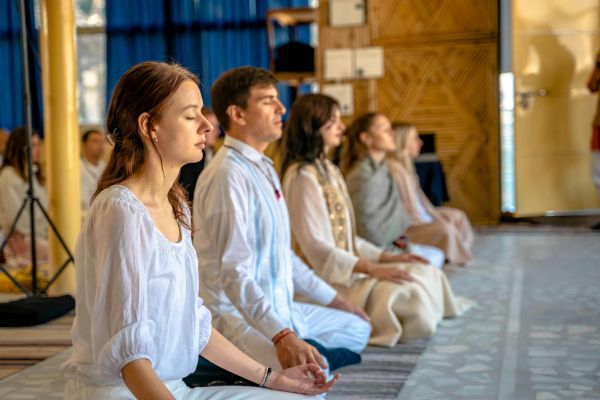
One of the most powerful tools for a person undergoing spiritual awakening is meditation. It provides an avenue where the mind can be stilled, the emotional state can find balance, and then connect to a deeper purpose. But with so many techniques, how do you know which one is the best fit? If you want to know how to choose the right meditation for spiritual awakening, this article will take you through a step-by-step process.
Understanding Meditation and Spiritual Awakening
Before you find the right meditation practice, it is important to understand what happens during a spiritual awakening.
A spiritual awakening is a deep inner transformation. It is that point when you start to see life beyond your mundane thoughts, routines, and roles. You find yourself asking, “Who am I?” or “What is my purpose?”.
On this journey, meditation becomes a valuable companion, allowing you to quiet the noise of the mind, listen to your inner guidance, and let go of limiting beliefs. Not every meditation works the same for all of us, though. The best modality for you will depend on your state of mind at any given moment and where you find yourself in this whole awakening process.
Step 1: Identify your current needs
First, it’s a matter of tuning in to what you need right now. Spiritual awakening can come with emotions and sensations: peace, confusion, shifts of energy, or anxiety.
Here’s how to match your needs with the right meditation approach:
If your mind is overactive, try breath awareness meditation since it brings your attention to breathing for relaxation and composure.
If you feel disconnected, go for heart-centered meditation, which fosters compassion and encourages emotional healing.
For clarity, practice mindfulness meditation, which is a way to become more aware of your thoughts and patterns.
If you’re experiencing strongly shifting energies, use grounding meditation to help you anchor and come back into your body.
Understanding your spiritual-emotional needs will help you in choosing the best meditation for spiritual awakening.
Step 2: Explore various meditation techniques.
There are many styles of meditation, each serving a different purpose. Here are a few popular varieties that you might want to try.
- Mindfulness Meditation
The whole purpose of mindfulness is to be present within that moment in time. You become the observer of your thoughts and do not judge them. This type of meditation is good if you’re new to the practice, since it teaches self-awareness and acceptance – both of which are essential qualities during a spiritual awakening.
- Guided Meditation
You may also wish to try guided meditation if meditating alone is a bit difficult for you. It may involve verbal guidance, music, or visualization. You can find plenty of free sessions online that are particularly intended for spiritual awakening.
- Mantra Meditation
Mantras, in a nutshell, are the holy sounds or words that one repeats, either silently or vocally. The practice of chanting mantras lifts one’s vibration and stills the mind. In fact, it works wonders for those who suffer from racing thoughts or emotional fluctuations.
- Transcendental Meditation
The method employs a private mantra as a means of getting beyond the usual stream of thoughts to establish communication with the higher self. It is extremely simple, yet very powerful in attaining deep awareness.
- Movement Meditation
Meditation is not only about being motionless. For instance, walking meditation, yoga, and tai chi are all practices that combine movement with mindfulness and can help unblock the energy that is preventing you from experiencing inner peace.
All these techniques will let you find out which one best suits your awakening process.
Step 3: Follow Your Intuition
In short, when it is about meditation practice, your intuition will be the best helper. The spiritual awakening process makes you more sensitive to the inside, and the soft voice in you will always point out what is right.
After experimenting with a few different types, notice how your body and mind react. Does one practice make you feel lighter, calmer, or more connected? Then, that is the one to concentrate on.
Do not forget that the meditation practice you choose for spiritual awakening could change along with your personal growth. Stay adaptable and let your practice change along with you.
Step 4: Establish a Consistent Routine
The most effective meditation is done regularly. Consistency helps you move beyond surface relaxation into deeper transformation.
The following are a few easy ways to establish a long-term routine:
Start small: Even just 10 minutes a day can make a difference.
Choose a quiet space: Find a quiet place where you will not be distracted.
Timing: Get into a routine by meditating at the same time each day.
Be patient: Some days will go easier than others. Trust the process.
Over time, your meditation practice will enable you to navigate the symptoms of awakening and connect you more powerfully with your higher self.
Step 5: Combine Meditation with Daily Awareness
Meditation does not necessarily have to end with the session. Take that calmness and awareness into your daily life as much as possible.
Practice breathing while working, listen deeply when talking to others, and take a pause before reacting to stressful situations. Every moment can become a mini meditation. A simple awareness yet strong in keeping one’s spiritual growth and balance in daily life.
Common Challenges and How to Overcome Them
Most people have some problems in the beginning with Meditation for Spiritual Awakening. Here’s how to handle them:
Restlessness: When the mind wanders, gently bring the focus of attention back to the breath.
Sleepiness: Do not meditate by lying down, or meditate upon waking in the morning.
Inconsistency: Put it in your diary or make use of a meditation app.
Emotional release: This is normal as emotions come to the surface. Allow them to pass without judgment.
With patience and practice, your meditation will deepen and your awakening will be more peaceful.
Final Thoughts
The kind of meditation you will do is a personal choice, and it may change over time. There’s no one way to meditate that works for everyone; there’s only what works for you.
Begin with your present needs and play with various techniques; trust that inner wisdom. Meditation for Spiritual Awakening is not about perfection; it’s about presence, peace, and connection.
As you continue with practice, you start to notice subtle yet powerful shifts: more calm, clarity, and alignment with your true self.
Begin your inner journey today; explore Spiritual Awakening Signs to find just the right meditation practice here that resonates with your awakening path.
(FAQ)
- How often should I meditate during spiritual awakening?
Strive for at least 10–20 minutes daily. Regular practice helps balance your energy and maintain emotional clarity.
- Can I try more than one meditation type?
Of course. Feel free to experiment. Combining approaches, such as mindfulness and mantra meditation, will add depth to your practice.
- What if I am unable to stop my thoughts while meditating?
You aren’t supposed to stop the thoughts – only observe them without attachment. In time, they will calm down naturally.
- How will I know if a meditation technique is right for me?
If, after meditation, you feel calm, connected, and centered, then this is a very good sign that this practice suits you.
- Can meditation help decrease awakening symptoms such as anxiety or surges of energy?
Absolutely, meditation grounds your energy, soothes the mind, and sustains emotional balance during times of intense awakening.